Welcome to MCCA

- Call Us
- +603 7726 7316
- Visit us
- Petaling Jaya, Selangor Darul Ehsan, Malaysia
- Mail Us
- admin@malaysiancoaches.com

Blog Detail
- Blog
- December 7, 2025
Why Emotional Intelligence? (For Coaches)
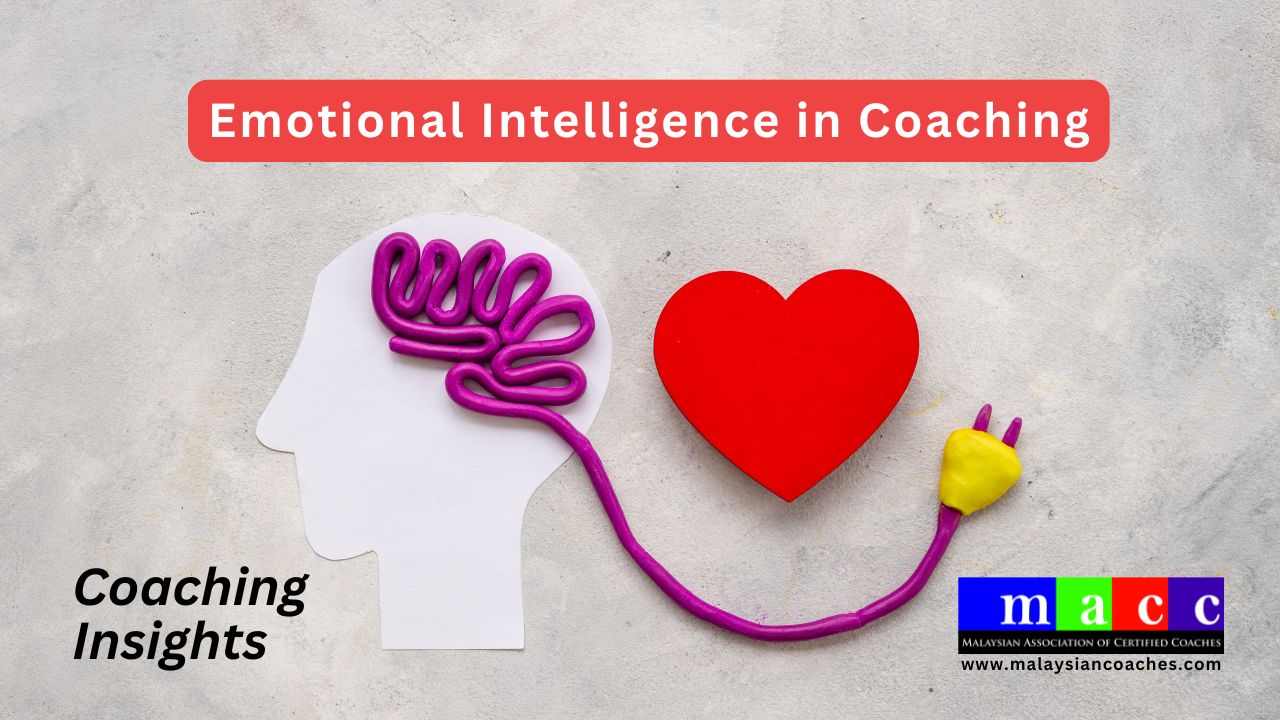
Ever wondered why emotional intelligence (EI) is so important in coaching? Coaching isn’t just about using the right tools or asking smart questions. It is, at its heart, about building a genuine connection with your client.
The simplest way to understand EI is this:
“Be aware of your own emotions. Understand the other person’s emotions.”
This naturally involves empathy, self-control, and emotional awareness—qualities that help coaches stay grounded and present.
A coach with high EI creates a safe and open space. Clients feel understood, especially when working through difficult emotions. For example, fear of failure is real. A high-EI coach might say, “It sounds like you’re afraid of not succeeding. Can you share what that fear feels like?”
This kind of response acknowledges the emotion and invites deeper exploration. It helps clients feel supported rather than judged.
How can coaches develop EI?
It is an ongoing process of reflecting on your own emotions and behaviours. Notice your thoughts. Identify what triggers you. Observe how your reactions influence others. Know your values and understand why certain triggers affect you strongly.
It also helps to seek feedback—from clients, peers, colleagues, and family. Feedback reveals blind spots, and all coaches have them.
Ultimately, EI is a vital ingredient in effective coaching. It strengthens the coach-client relationship and supports meaningful, lasting outcomes.
Article contributed by MACC EXCO member - Coach Lim Poh Chin, MACC Writer, IAC Masteries Practitioner.
Related Posts
.jpg)


.jpg)



.jpg)


 (730 x 350 px) (2).jpg)
 (730 x 350 px).jpg)
 (730 x 350 px) (1).jpg)